How to Build a Cozy Reading Nook in One Afternoon
Step-by-step method: build a reading nook in one afternoon
This is a calm, practical checklist for making a comfortable reading spot without a big budget or a full redesign. Work through the steps in order and spend no more than 10–20 minutes on each. The goal is comfort and usability, not perfection.
-
Choose the spot (10 minutes).
Look for a corner or stretch of wall with natural light and some privacy. Common choices: near a window, beside a bookshelf, at the end of a hallway, or a cleared section of a bedroom. Mistake to avoid: picking the most dramatic corner rather than the most comfortable one. Correction: test the spot by sitting there for five minutes with a book.
-
Decide the primary function (5 minutes).
Is this for long, immersive reading, quick magazine browsing, or a place to rest and think? The purpose determines seat choice and the need for a side surface. Mistake to avoid: treating it like a living-room showpiece. Correction: prioritize comfort and reachability for your most common use.
-
Select seating (15 minutes).
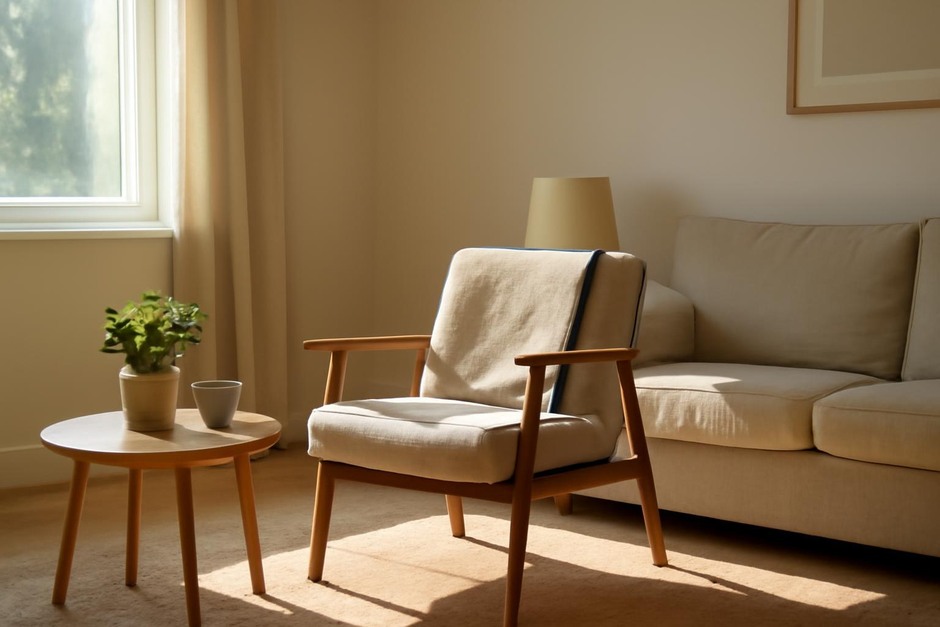
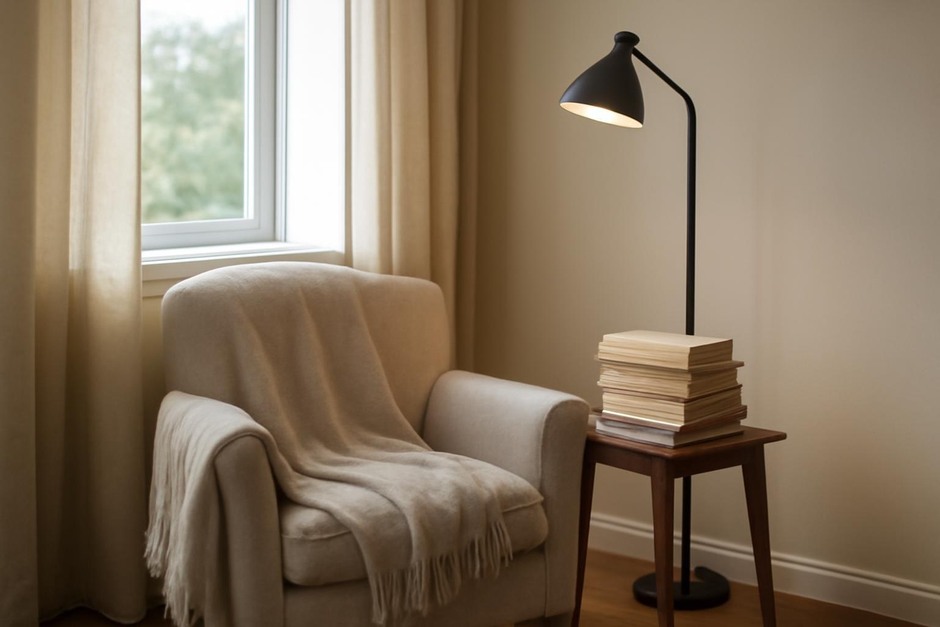
Options: a small armchair, a lounge chair, a cushioned bench, a floor cushion, or a reclined window seat. Common mistake: choosing a chair that looks good but is too firm or too low for comfortable reading. Correction: test seat height—your feet should touch the floor and your forearms rest comfortably on armrests or your lap.
-
Add layered lighting (15 minutes).
Combine natural light, a task lamp, and soft ambient light. For reading, a lamp with an adjustable arm or a focused shade is best. Mistake to avoid: relying solely on overhead or indirect light, which can cause eye strain. Correction: include a directional lamp positioned to the side and slightly above your shoulders.
-
Create surfaces and storage (10 minutes).
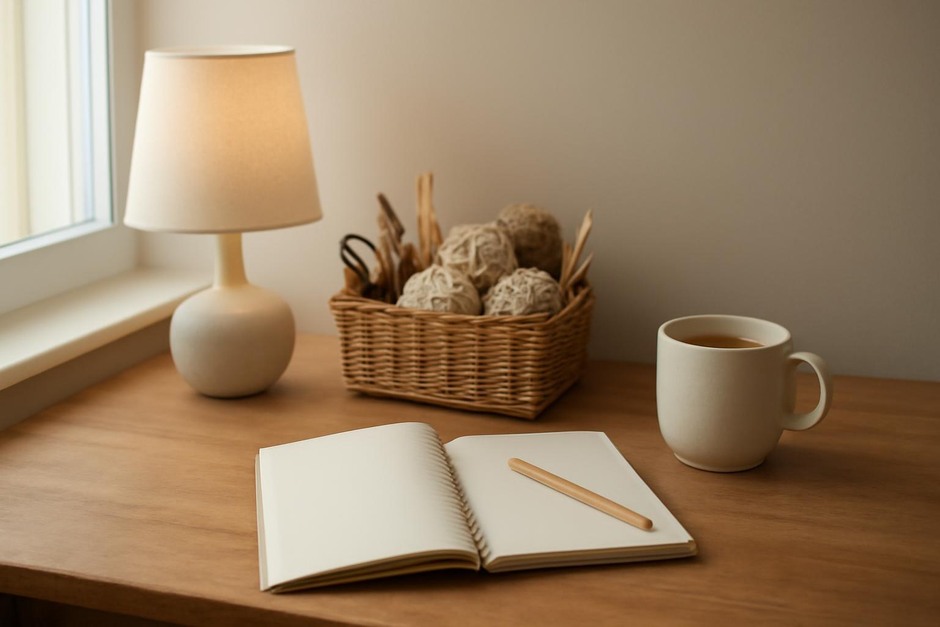
A small side table, a floating shelf, or a basket can hold a drink, glasses, and current reading. Mistake to avoid: stacking books on the floor where they become clutter. Correction: use a single basket for overflow and a small tray for current items.
-
Soft finishes and temperature (10 minutes).
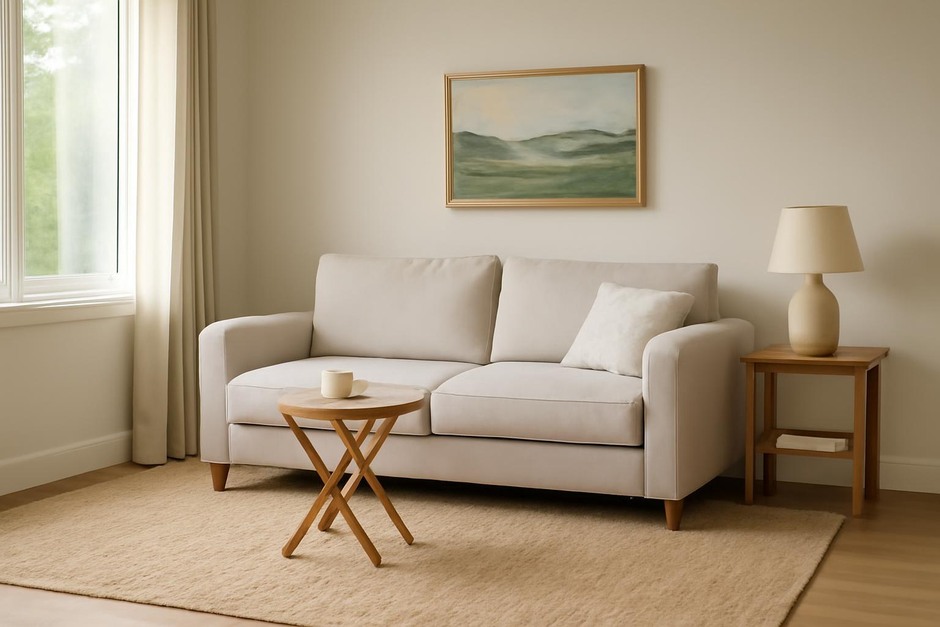
Add a throw, a cushion, and a soft rug to define the area and add insulation. Mistake to avoid: too many small cushions that require constant rearranging. Correction: choose one back cushion and one smaller lap cushion for support.
-
Personalize and simplify (10 minutes).
Add one plant, an artwork, or a small clock. Keep decor minimal so the nook feels calming. Mistake to avoid: overcrowding with trinkets. Correction: limit to two personal items that spark calm or inspiration.
-
Final test (5 minutes).
Sit for 15–20 minutes with a book or magazine. Note what’s missing: a footstool, a brighter bulb, or a coaster. Make small adjustments immediately.
Variations
Small apartments
- Choose multi-use pieces: a window bench with built-in storage or a folding armchair that tucks away.
- Use vertical storage—narrow wall shelves or a ladder shelf beside the spot—to keep the floor clear.
Shared living rooms
- Define the nook with a slim console or rug instead of rearranging large furniture.
- Use a portable task lamp or a clip-on light that can move with the chair.
Kids’ reading corner
- Swap a delicate lamp for a soft-glow nightlight and use washable cushions.
- Low bins for books are better than tall shelves—kids can see and reach titles.
Budget-friendly
- Repurpose a comfortable kitchen chair with an added cushion and throw.
- Use secondhand baskets and lamps; a simple clamp lamp costs little and performs well.
Troubleshooting: common mistakes and useful corrections
-
Problem: The light makes pages glare or casts shadows.
Fix: Move the lamp to the side opposite your writing hand and lower or raise the bulb. Choose a warm 2700–3000K bulb for comfort, and add a lampshade to diffuse harsh light.
-
Problem: The chair feels uncomfortable after a short time.
Fix: Add lumbar support with a small firm cushion and a footstool to relieve leg pressure. If the seat is too low, add a thin seat pad or swap for a higher chair.
-
Problem: The nook becomes a clutter magnet.
Fix: Introduce a single catch-all basket and a daily 2-minute reset routine. Remove anything that doesn’t belong to the nook after reading.
-
Problem: It feels exposed or distracting.
Fix: Use a tall plant, a screen, or a narrow bookshelf to create a visual barrier. Headphones or a small white-noise device can help with distracting sounds.
-
Problem: Seasonal discomfort—too hot or too cold.
Fix: Swap throws with lighter-weight options in summer, and add a small plug-in heater or a thermal rug in winter. Natural ventilation is preferable; consider a small fan for warm afternoons.
With this checklist, you can create a genuine, comfortable reading nook in an afternoon and adjust it over time. Focus on one or two fixes when something feels off, and remember: a great nook is more about being used than being perfectly styled.